
Antelope Canyon masificado: The shocking truth behind the crowds
- Unveiling the Reality of Antelope Canyon’s Overcrowding
- The Allure of Antelope Canyon: Why Tourists Flock Here
- The Overcrowding Problem at Antelope Canyon
- The Impact of Mass Tourism on Antelope Canyon’s Environment and Culture
- Visitor Experiences: What Tourists Really Say About the Crowds
- Comparing Upper and Lower Antelope Canyon: Crowds, Costs, and Experiences
- Alternatives to Antelope Canyon: Discovering Less Crowded Slot Canyons in Utah and Arizona
- Practical Tips for Visiting Antelope Canyon Despite the Crowds
- The Future of Antelope Canyon: Managing Overcrowding and Preserving Natural Beauty
- Is Antelope Canyon Worth the Hype?
- Opinions and Voices from Real Visitors and Experts
- References and Useful Links
Unveiling the Reality of Antelope Canyon’s Overcrowding
Antelope Canyon stands as one of the most iconic natural wonders in the American Southwest, famous for its narrow slot canyon walls and mesmerizing light beams that dance on orange sandstone. Visitors from around the world flock here, eager to witness and photograph this geological marvel. Yet, beneath the surface of its breathtaking beauty lies a growing problem: the site is heavily overrated and masificado — overwhelmed by crowds that diminish the visitor experience and strain the environment.
This article aims to peel back the layers of this popular destination, exploring why Antelope Canyon has become so congested, what consequences this brings to the natural and cultural landscape, and what alternatives exist for travelers seeking a more genuine connection with nature. For those who value sustainable tourism and authentic adventures, understanding the reality behind the hype is essential.
The Allure of Antelope Canyon: Why Tourists Flock Here
Antelope Canyon’s charm lies in its unique geological formation: a narrow slot canyon carved by centuries of water and wind erosion through soft sandstone. The canyon’s walls rise dramatically, creating a natural amphitheater of rocks and sand that glow in warm hues. The most famous feature is the ethereal light beams that pierce the canyon at midday, creating a surreal atmosphere that photographers and travelers dream of capturing.
Located within the Navajo Nation, Antelope Canyon is accessible only through guided tours led by Navajo guides. This cultural connection adds a layer of significance, as visitors not only explore a natural wonder but also engage with the heritage of the Navajo people.
The surge in popularity over recent years owes much to social media, where stunning images of the canyon’s light halos have gone viral. Photography tours and mainstream travel guides have further fueled the influx of tourists, all eager to tick off this “must-see” destination from their bucket lists.
The Overcrowding Problem at Antelope Canyon
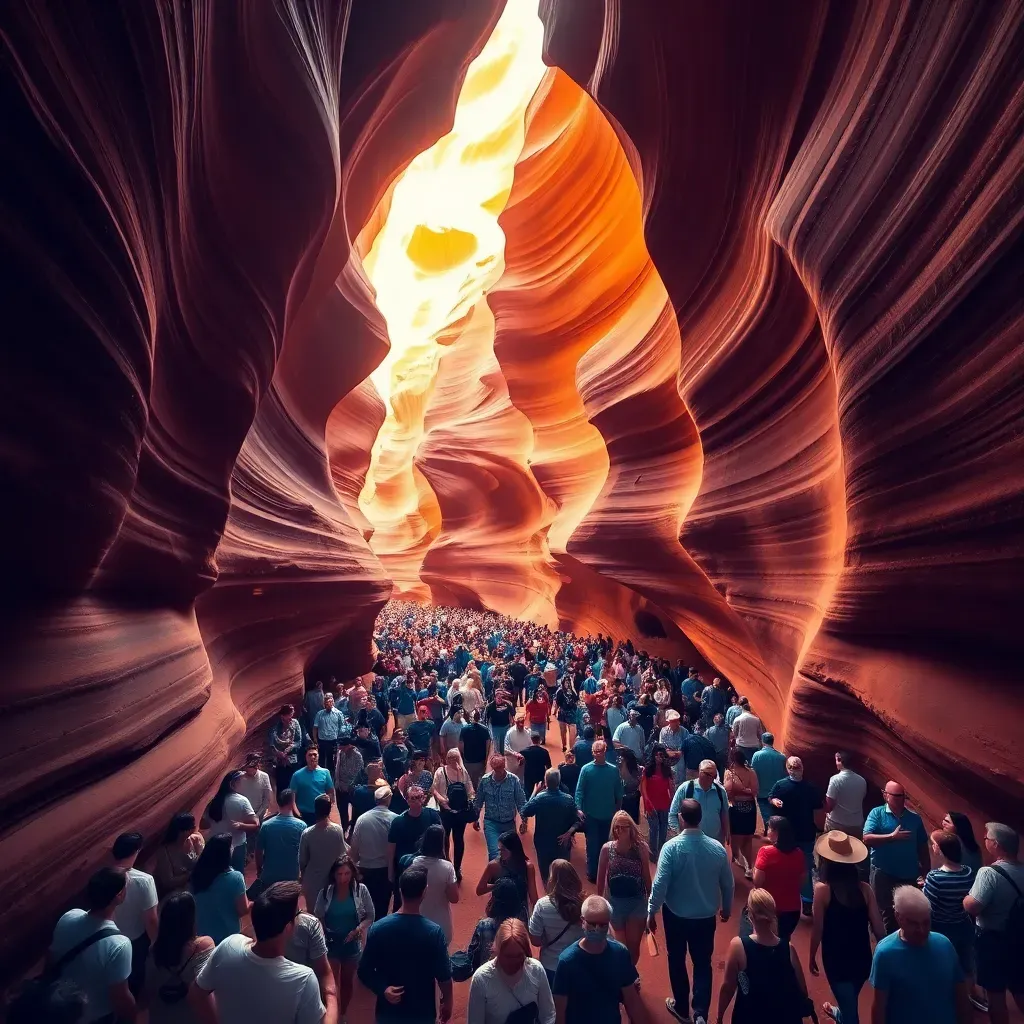
The term “masificado” perfectly captures the overcrowded nature of Antelope Canyon today. Visitor numbers have skyrocketed, especially during peak seasons from spring to fall, with hundreds of people funneled through the canyon daily. Tour groups often exceed 20 people, and multiple groups enter the canyon simultaneously, creating a congested and noisy environment.
This crowding severely impacts the visitor experience. The narrow paths inside the canyon allow little room for movement, making it difficult to pause and absorb the surroundings peacefully. Photography opportunities are limited as visitors jostle for the best angles, and tours feel rushed to accommodate the volume of visitors.
The current booking system, while requiring advance reservations, struggles to control the flow effectively. The canyon’s physical constraints mean that even with guided tours, the space becomes packed quickly, leading to frustration among many travelers.
The Impact of Mass Tourism on Antelope Canyon’s Environment and Culture
The environmental toll of mass tourism at Antelope Canyon is significant. The constant foot traffic accelerates erosion of the delicate sandstone surfaces, while litter and human disturbance threaten the fragile nature and local wildlife. The sandy floor, once pristine, now bears the marks of thousands of footsteps daily.
For the Navajo Nation, managing this influx is a delicate balancing act. Tourism generates vital revenue, but the commercialized nature of the tours can dilute the cultural authenticity of the site. Local traditions and the spiritual significance of the canyon risk being overshadowed by the demands of mass tourism.
Navajo guides face intense pressure to manage large groups efficiently, often sacrificing the depth of cultural storytelling for speed. Infrastructure around the site, including parking and visitor facilities, also struggles under the weight of so many tourists.
Visitor Experiences: What Tourists Really Say About the Crowds
Real visitor reviews paint a mixed picture. Many praise the canyon’s breathtaking beauty, describing the light beams and sandstone formations as unforgettable. However, a common thread of complaints emerges about the crowded conditions.
"The canyon is stunning, but the tour felt rushed and packed. It was hard to get good photos without people in the frame." – Tripadvisor user
"We booked months in advance, but still ended up in a group of 25. The guide was great, but the crowds made it less enjoyable." – Travel blog comment
"If you want peace and quiet, this is not the place. The beauty is real, but so is the congestion." – Instagram traveler post
Despite these frustrations, some visitors acknowledge that the experience is worthwhile if expectations are managed. The canyon’s natural wonders remain impressive, even if the setting is less serene than imagined.
Comparing Upper and Lower Antelope Canyon: Crowds, Costs, and Experiences
Antelope Canyon is divided into two main sections: Upper and Lower. Each offers a distinct experience, with differences in crowd levels, lighting, and accessibility.
| Feature | Upper Antelope Canyon | Lower Antelope Canyon |
|---|---|---|
| Crowd Density | Very crowded, especially midday | Less crowded, more peaceful |
| Lighting | Best light beams at midday | Fewer light beams, more shadow contrasts |
| Accessibility | Easy walk, flat paths | Steeper, narrow paths with ladders |
| Tour Cost (approx.) | $50-$60 per person | $40-$50 per person |
| Tour Duration | 1-1.5 hours | 1.5-2 hours |
| Suitability | Photographers, casual visitors | Adventurous travelers, families with older kids |
While Upper Antelope Canyon offers iconic photo moments, it is often overrated due to the packed crowds. Lower Antelope Canyon provides a quieter alternative but requires more physical effort and offers different lighting effects.
Alternatives to Antelope Canyon: Discovering Less Crowded Slot Canyons in Utah and Arizona
For travelers seeking similar natural beauty without the congested Antelope Canyon crowds, several lesser-known slot canyons offer excellent alternatives.
- Waterholes Canyon (Arizona): Located near Page, it is less commercialized and offers stunning narrow passages with fewer visitors.
- Buckskin Gulch (Utah): One of the longest slot canyons in the world, ideal for hikers looking for a more rugged experience.
- Zebra Slot Canyon (Utah): Famous for its striped rock walls, it is less crowded and accessible via short hikes.
- Peek-a-Boo and Spooky Gulch (Utah): Smaller canyons with challenging terrain but minimal crowds.
| Destination | Location | Crowd Level | Accessibility | Highlights |
|---|---|---|---|---|
| Waterholes Canyon | Arizona | Low | Easy | Narrow passages, fewer tourists |
| Buckskin Gulch | Utah | Low | Moderate to Difficult | Longest slot canyon, hiking |
| Zebra Slot Canyon | Utah | Low | Easy to Moderate | Striped rock walls, photography |
| Peek-a-Boo & Spooky Gulch | Utah | Very Low | Difficult | Challenging terrain, solitude |
Choosing these alternative destinations can provide a more peaceful, authentic experience while reducing environmental impact and avoiding the frustrations of overrated and crowded sites.
Practical Tips for Visiting Antelope Canyon Despite the Crowds
If visiting Antelope Canyon remains a priority, some strategies can help manage the touristy experience:
- Book tours well in advance, especially for Upper Antelope Canyon during peak seasons.
- Choose early morning or late afternoon tour times to avoid the busiest midday light beam hours.
- Travel light: Bag restrictions are strict; bring only essentials and minimal photography gear.
- Manage expectations: Understand that the canyon will be busy and photo opportunities limited.
- Practice responsible tourism: Follow guide instructions, avoid littering, and respect the cultural significance of the site.
These tips can help visitors enjoy the canyon’s beauty while minimizing frustration and environmental impact.
The Future of Antelope Canyon: Managing Overcrowding and Preserving Natural Beauty
The Navajo Nation and tour operators are aware of the challenges posed by overcrowding and are exploring measures to protect Antelope Canyon’s integrity.
Proposals include:
- Visitor caps to limit daily numbers.
- Timed entry systems to stagger arrivals and reduce congestion.
- Enhanced education on cultural and environmental respect.
- Investment in infrastructure to better handle visitor flow.
Balancing economic benefits from tourism with conservation and cultural preservation remains a complex task. Travelers play a role by choosing responsible tours and considering less crowded alternative destinations.
Comparison of Upper and Lower Antelope Canyon Experiences
Alternative Slot Canyons Near Antelope Canyon
Key Insights
Antelope Canyon is renowned for its stunning light beams and unique slot canyon formations but suffers from severe overcrowding, especially in Upper Antelope Canyon during peak midday hours. This congestion impacts visitor experience, limits photography opportunities, and accelerates environmental wear. Lower Antelope Canyon offers a quieter, more physically demanding alternative with different lighting effects and lower costs. For travelers seeking solitude and less commercialized beauty, nearby slot canyons such as Waterholes Canyon and Buckskin Gulch provide excellent low-crowd alternatives with varying accessibility and terrain challenges. Responsible tourism practices and visiting during off-peak times can help mitigate the impact of mass tourism on this fragile natural and cultural site.
Is Antelope Canyon Worth the Hype?
Antelope Canyon’s natural beauty is undeniable, with its stunning rocks, sand, and iconic light beams captivating millions. However, the reality of its masificado state means many visitors face crowded, rushed tours that detract from the experience.
For those who prioritize authentic, peaceful encounters with nature, Antelope Canyon may feel overrated and overhyped. Yet, with careful planning and realistic expectations, it can still offer memorable moments.
Exploring alternative destinations nearby or in Utah provides options for travelers seeking solitude and less commercialized beauty. Ultimately, informed choices and responsible travel are key to preserving these wonders for future generations.
Opinions and Voices from Real Visitors and Experts
"Antelope Canyon is breathtaking, but the crowds make it hard to enjoy fully. I recommend going early or late in the day." – Navajo guide
"The canyon’s beauty is real, but the experience felt like a conveyor belt. I wish there were fewer tourists." – Environmentalist
"I loved the tour but was surprised by how packed it was. Photography was challenging with so many people." – Travel blogger
"Choosing Waterholes Canyon instead gave me a peaceful experience with similar beauty and no crowds." – Experienced hiker
References and Useful Links
- Tour en Antelope Canyon - La Gaveta Voladora
- Antelope Canyon Navajo Tours - Merisland
- Las grandes maravillas del Oeste Americano - Beaviajera
- Antelope Canyon Reviews - Tripadvisor
- Antelope Canyon y alternativas - 365 Sábados Viajando
- Antelope Canyon y Horseshoe Bend - Mundo Turístico
- Experiencias en Antelope Canyon - Los Viajes de Alba
- Roadtrip por el Oeste Americano - El Toma Vistas
- Antelope Canyon Navajo Tours - Tripadvisor
What do you think about the crowds at Antelope Canyon? Have you experienced the masificado conditions yourself? How would you prefer to explore such natural wonders—packed tours or quiet alternatives? Share your thoughts, questions, or travel stories in the comments below. Would you like to know more about lesser-known slot canyons or tips for responsible tourism? Let us know!
 Isla de Chiloé decepcionante: the truth travelers hide
 Blue Ridge Parkway soso? The shocking truth no one tells you
 Venice oversaturated: The shocking truth no traveler dares to admit
Si quieres conocer otros artículos parecidos a Antelope Canyon masificado: The shocking truth behind the crowds puedes visitar la categoría America.
Leave a Reply